by Chad Bishop
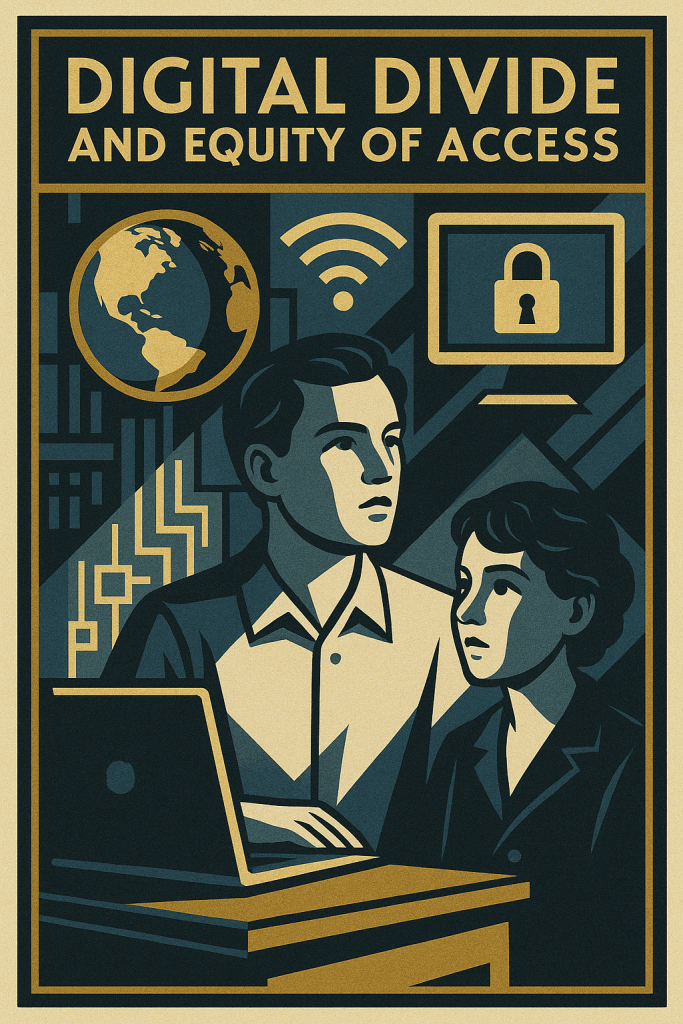
In an ideal world every student logs in clicks a link and instantly enters a space filled with polished geometry proofs immersive virtual labs thoughtful peer discussions and a perfectly organized homework portal. The teacher imagines a smooth seamless system where learning is available anytime anywhere. But the real world is far messier. Even with countless new digital tools the idea of equal access remains more fiction than fact. For many students digital learning is not a doorway to opportunity but a locked gate that requires resources they simply do not have. Even in tech aware regions yes including places like San Diego teachers see this divide daily through missing assignments awkward apologies and students who try to complete serious work on a tiny phone screen. This gap in access is not just inconvenient it shapes educational outcomes in profound and lasting ways.
What the Numbers Say: The Gap Is Real Deep and Persistent
A major study conducted in twenty twenty four revealed that nearly one third of school age children reported not using the Internet at home or at school. Another large portion reported that they only used the Internet at home and not for any school based learning. These numbers are a stark reminder that availability does not equal accessibility.
Before the pandemic researchers already knew that California had major gaps. Nearly one in six California students in grades K through twelve lacked reliable home internet access a fact that clashed with the states reputation for innovation. During distance learning this gap became painfully visible and many students experienced interruptions that were entirely due to limited access rather than academic ability.
Household access is also a deeply nuanced issue. A family may claim to have internet but that internet might be a single smartphone with a limited data plan. Many lower income families rely heavily on prepaid wireless service which simply cannot support structured school work. Even when a laptop exists it is often shared between multiple siblings or adults who need it for work creating schedule conflicts that directly affect learning.
Nationally the picture is even more striking. When schools moved online in twenty twenty an estimated fifteen to sixteen million K through twelve students lacked either reliable internet service or a suitable device. That is close to one third of all students in the country and it reveals how fragile educational technology really is when families do not have stable foundations.
In short the digital divide is not an abstract policy problem. It is a daily force that determines who gets to access meaningful instruction and who struggles before they even begin.
Why This Matters: Education Equity and Long Term Opportunity
Reliable access to the internet is no longer a luxury or an enrichment tool. It is a foundation of modern education. Students without consistent access face enormous barriers. They miss essential online assignments cannot participate in platforms used by their teachers and cannot complete research that assumes connectivity. Even basic communication with teachers becomes difficult.
The impact spreads further. Students without technology access are less able to build the digital literacy skills that colleges and employers now expect as standard. They struggle with science simulations and math tools that are foundational in current curricula. They fall behind in digital writing systems that classmates use daily. These gaps widen over time and create a deep difference in confidence motivation and academic identity.
Research consistently shows that students without home digital access are less likely to engage meaningfully with online learning and more likely to fall out of sync with the rhythm of class. The lack of connection does not just hinder individual tasks it disrupts continuity relationships and long term progress.
The divide intersects heavily with race income language background and geography. Students from historically underserved communities are disproportionately affected and these same students often benefit the most from strong educational systems. When they lack access the system fails in its most essential mission.
If internet access determined eligibility for learning many bright students would be disqualified before they even logged in.
The Southern California Context: Not Immune to the Divide
Teaching in Southern California where innovation is often celebrated it can be tempting to assume that most families have what they need. But teachers know the truth. I have worked with students near San Diego who try to complete science labs on a cracked phone screen while sitting in a parking lot because it is the one place they can get a stable signal. I have had students share a single family laptop with three siblings creating a nightly competition for time that leaves everyone stressed and underprepared.
State surveys show improvements with ninety one percent of households reporting broadband access. But access does not equal stability and it does not equal quality. Many low income families remain under connected meaning that their internet service is too slow inconsistent or limited to support regular academic use.
In a region known for biotech research engineering firms and university level technology work it is troubling that so many young learners still face structural barriers to the very tools required to join those fields someday.
What Research and Policy Suggest: Bridging the Divide Is Possible
Researchers agree that efforts to solve the divide must go far beyond device distribution. Giving a family a laptop is only the beginning. Real solutions include stable broadband reliable technical support training for parents and students and ongoing updates so that devices do not become obsolete after a year.
Schools that distributed devices during emergency closures now face the responsibility of maintaining those devices training families in their use and ensuring that internet service continues. Without follow through the initial progress dissolves and the divide reappears just as wide as before.
Many experts argue that internet access must be treated as essential infrastructure similar to transportation electricity or water. Modern education cannot function without it. Future opportunity in science math and countless other fields will depend on early digital fluency.
As Teachers What We Can Do and What We Should Demand
Teachers are not policymakers but we are witnesses and advocates. We can push for school provided internet solutions work to identify students who lack access and design assignments that do not penalize students for circumstances outside their control.
We can teach digital skills explicitly so that students learn how to evaluate online information manage digital work and navigate academic platforms. These are not extras anymore. They are core skills that shape educational futures.
Most importantly we can insist that digital equity is not a temporary pandemic issue but a long standing structural barrier that must be addressed. If education is supposed to give all students a fair chance then access to technology cannot remain a privilege tied to income or circumstance.
The Digital Divide Is Not History Yet
The digital divide remains one of the most consequential and persistent barriers in education. It influences academic performance opportunity access participation and long term success. Until every student has reliable devices stable internet and the skills to use them we cannot honestly claim to offer equal opportunity.
For teachers in Southern California from San Diego to the high desert this divide is part of our daily reality. We see it in missing assignments in overwhelmed families and in students who want to succeed but lack the tools. Our responsibility now is to continue raising awareness urging thoughtful policy and building classrooms that acknowledge the problem rather than assuming it has already been solved.
 Chad Bishop